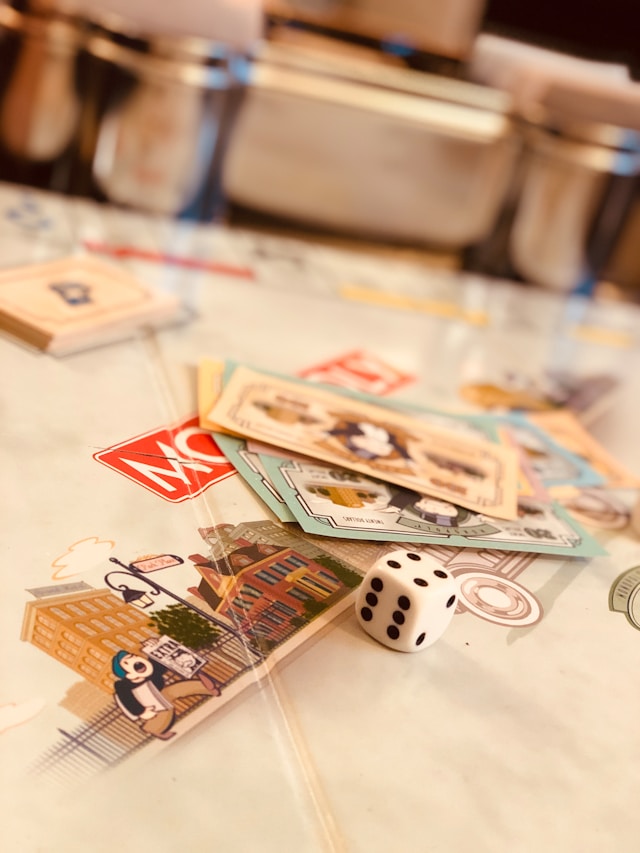
When I first started homeschooling I did not think of board games. As a kid I played card games and chess with my mom. We had a few classic board games, my favorite was candyland. We had monopoly, scrabble and a deck of cards which provided endless games to play.

Games were a big part of spending time with my mom, we didn’t have a tv for a lot of my childhood. Instead we would listen to the radio and do crafts, read, or play games. I miss those times, but I didn’t think of bringing games into my homeschooling. For one thing I had never recognized just how much learning could be done with a board game! I just had fun playing them as a kid. I also had absolutely no idea the range of types of board games there are! No more candyland for me!
Why Board Games?
The idea of incorporating board games into our homeschool actually started in therapy. Before therapy we never really played board games at all. I tried but my oldest didn’t care about it, and the younger ones would quickly want to play with the pieces or the cards. Very soon half of the board game was missing throughout the house. It just seemed like too much of a hassle, so we didn’t play them. I was completely thrown for a loop when speech and occupational therapy used board games as part of their sessions!
Learning and following the directions was extremely difficult for my kids. Most importantly was what happened when they lost… Complete and total meltdown! My oldest had the hardest meltdowns after losing any game. My kids didn’t know how to lose gracefully. They could not handle upsets in life and here was this perfect way we could literally practice rolling with life’s upsets! But it was very stressful trying to break out a board game at home. My kids would start crying, going into a full on meltdown, or in some cases even raging out because of the mere possibility of losing a game! This was torture for me, torture for them, and it made therapy worse because it made the kids hate board games even more.
Podcasts to the Rescue!
Around this time in my homeschooling journey I was listening to podcasts and joining all the facebook groups! I was listening to a Homeschool Together podcast and they were talking about the idea of gameschooling. At first I brushed it off, that wasn’t going to work for us at all! But I was busy and couldn’t skip to the next episode so I kept listening. They were talking about a game called The Forbidden Island, a co-op game! I didn’t know co-op board games existed! I thought all board games were to test your friendships and make you ask yourself….how badly do you want to beat grandma? Are there board games that you have to work together to win?
So everyone wins or everyone loses and they have to learn to cooperate. The podcasters played this with their 7 year old! The game is challenging, but it doesn’t actually involve any reading….this….was…perfect! Before I got too excited I wanted to go home and check it out. Remember games were not going well at my house and board games aren’t cheap!
When I got a bit of spare time I looked up how to play the forbidden island game… And oh my nerdy heart, who did I find doing a review and playthrough of the game? None other than Will Wheaton of Star Trek the Next Generation! He teamed up with a delightful group of people including a nasa engineer. The game looked like a blast to play and could indeed be played by my youngest with some gentle nudging. His channel also opened my eyes (and made my homeschooling budget cry) to the wide variety of board games that I never knew existed!
It Arrived!
I ordered the game and showed it to my kids. At the mention of board game they all started to back away! Until I explained that this game is different, we all work together to beat the game, we all win or we all lose, together! They cautiously sat down as though they were expecting the pieces to explode, but were intrigued as I laid out the tiles. That was another thing, we didn’t have any game involving tiles, so this looked much different than what they were used to.
The real fun began when the island began to sink and they all had to help each other to keep from sinking! We won the game but it was a close thing, and it was awesome because usually a winner meant there were losers, and therefore hard feelings, but we all won! We all got to celebrate together! When we played again we lost. I was able to model how to be a graceful loser with them without them having someone to be mad at. You can’t be mad at the board game, I mean you can but it doesn’t do any good, the board game doesn’t care about your judgement.
The real beauty of this was when I brought competitive games back into our game rotation. When someone lost they still got annoyed, but no one melted down. The games of luck where someone is just constantly rolling badly and therefore losing the game through no real fault of their own? They would just start laughing whenever they would get a bad roll, they were learning to have fun with the game even though they were losing! This was magical!
Learning to Have Fun Together
Now we play a variety of co-op and competitive games! I do try to aim for games that take a bit more strategy to win, we aren’t fond of the games that rely purely on luck. I add them in every now and then because as annoying as it is to lose a game, sometimes in life you are just going to be dealt a bad hand or roll a bad dice. You are going to follow the rules and watch as the person who took the shortcut wins and you get the miss a turn card. It’s how we are able to look at that situation in a board game and in life and be able to handle it with grace and maybe humor.
But now I know that we don’t have to keep letting kids lose and think that will “toughen them up” or “build character”. Meeting them where they are at, helping them feel their emotions and work through them is what we are supposed to do as parents. Games are a wonderful low stress and low risk way to help work through big emotions. These are a struggle for all of us but seem to be particularly difficult for our neurodivergent kids.